
 Author:
You’ve probably sensed it already, being someone who watched the evolution of cricket closely. Cricket has crossed a point where instinct and experience are no longer enough to stay competitive. With cricket technology projected to reach $3.79 billion by 2030, with a 23.2% CAGR from 2025, the game is shifting faster than most traditional training and evaluation systems within cricket academies and teams.
You now operate in an environment where data sharpens talent, strengthens decision-making, and reveals gaps long before the scoreboard does. In this blog, we’ll explore how this shift is unfolding across training, coaching, and match preparation.
How Do Today’s Batsmen Understand Their Game Differently?
Modern batting still depends on the coaching experience. But now, modern academies also have tools that make the details clear. Let’s take a look at them.
- Smart Bats, Bat-Speed Trackers, and Swing-Angle Sensors
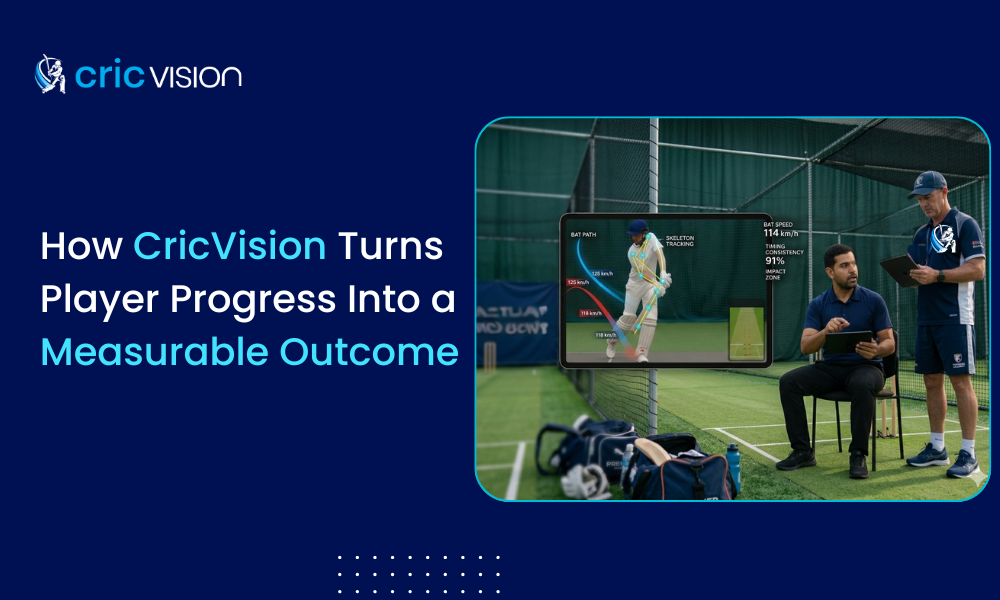
These devices capture the finer points of your batsman’s technique, such as bat speed, swing path, impact angle, and even micro-adjustments under pressure. Earlier, a coach’s trained eye was the primary source of feedback. Today, these devices reinforce coaching by showing your batter & coach what they already sense, making the learning loop tighter and far more effective.
- AI Highlighting Timing Issues and Footwork Patterns
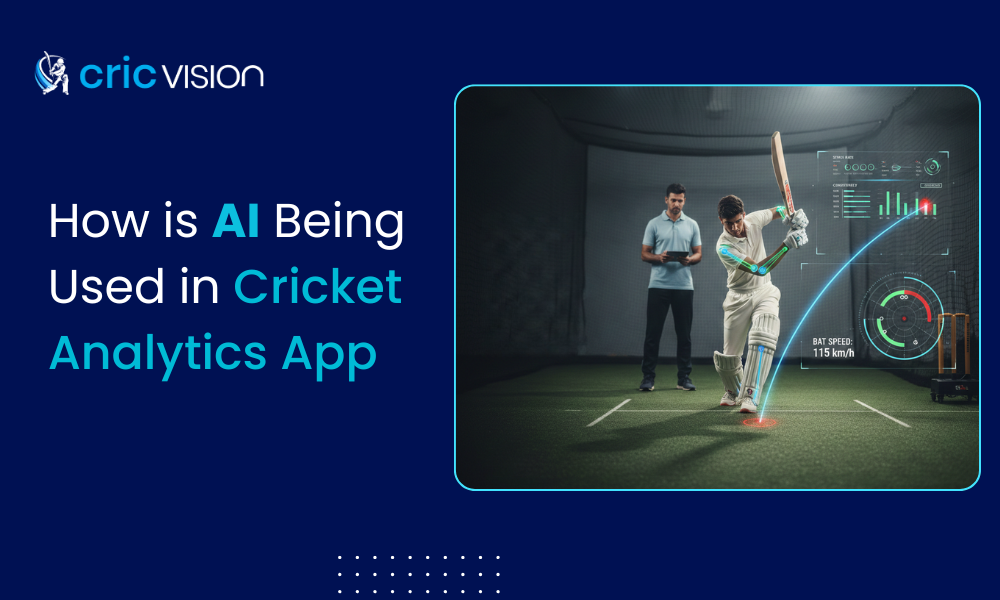
AI now provides consistency in analyzing batting patterns that often vary across sessions. It highlights if your batter is reacting late, losing balance at the crease, or repeating footwork patterns that affect shot selection. Instead of waiting for a long video review or a dip in performance, both your coach and batter see these patterns as they emerge. It allows corrections to happen early, when they matter the most.
This combination of coaching instincts and real-time data often marks the turning point for your academy, when a recurring issue finally becomes clear enough to address.
Use Case – How a young academy batter can solve a recurring issue against short-of-length outswingers.
Cricket academies have often seen young batters struggling with short-of-length outswingers. A coach may spot the hesitation, but the exact reason becomes clearer when technology is involved in the review. Sensor feedback shows a pattern that a human eye can sense but not measure: the trigger movement starts a fraction late, and the front shoulder opens early, guiding the bat off line.
Once both coach and player see the same insight, the correction becomes simpler. A few focused drills on earlier movement and a stable base improve timing within days.
While batting has become sharper through this kind of clarity, bowling has undergone an even more profound shift, driven by analytics, biomechanics, and real-time workload intelligence.
Why Modern Bowler’s Game Looks Very Different Now?
Bowling still depends on your academy’s coaching experience and a bowler’s technique.
But now, the evolving technology makes the details clear.
Let’s look at them.
- Ball Tracking, Seam Position, and Release Consistency
Modern tracking tools now capture finer details of every delivery, including line, length, seam position, deviation, and release angles. Earlier, your coaches relied on experience and long video reviews to identify these patterns. Today, technology surfaces these patterns instantly, giving your coaches a clearer picture of how a bowler’s action holds up across spells. It strengthens your coach’s feedback and reduces the time it takes for a bowler to make meaningful adjustments.
- Wearables Revealing Workload and Stress Patterns
Wearable sensors make it easier to see how much strain a bowler’s body is taking. They show when foot-landing impact increases, when fatigue begins to affect performance, and how intense the bowling has already been. This helps your coaches balance training and recovery, enabling bowlers to grow without unnecessary stress.
When these technical and physical patterns become visible, it becomes easier to make timely adjustments that support performance and long-term growth.
Here’s how this visibility plays out in real training environments.
Use Case – How a Young Fast Bowler Can Reduce Injury Risk Through Early Insights
Young fast bowlers often push through long spells without realizing how much strain each landing puts on their bodies. A coach may sense the fatigue, but technology helps confirm and explain the pattern. Wearable data may indicate rising landing force toward the end of the session and small alignment changes as the bowler tires.
With this kind of clarity, the adjustments become straightforward – shorter spells, structured recovery, and targeted strengthening sessions to support the bowler’s landing. Over time, the bowler maintains a deeper rhythm throughout sessions and avoids unnecessary risk.
Bowling is consistently becoming smarter through this balance of instinct and insight. Fielding has been transformed even faster, thanks to tools that measure speed, reaction, and coverage in ways that were previously impossible.
How Fielding Has Become the Biggest Beneficiary of Technology?
Fielding has always been the difference-maker for top teams & academy games, as it was for South African & Australian teams for years and still is. Today, technology strengthens that advantage by revealing the details behind every movement.
- Motion Capture for Reaction Time
Motion-capture tools now map how quickly a fielder responds, how efficiently they move to the ball, and where minor delays cause a missed chance. This clarity helps your coaches and the player identify the first-step direction, running angle, and body posture that often decide whether an opportunity becomes a wicket or a boundary. Your academy’s players begin to understand what they missed and where in the movement they lost time.
- High-Speed Replays for Angle Correction
High-speed replay provides slow, but detailed visibility into a fielder’s skills that are visible in a split second. Catching technique, throwing motion, hand position, and approach angle become measurable and repeatable. What once felt like instinctive errors now show up to your coach as actionable insights, making it much easier to refine fielding technique.
- Ground-Coverage Heatmaps
Ground-coverage heatmaps show which areas of the field your player reaches quickly and which ones take more time. They make it clear how well your players position themselves before each ball and whether they react in the right direction. For coaches, this helps identify movement patterns that need attention. For players, it provides simple awareness of which spaces they naturally cover well and which they tend to leave open, making training more focused and positioning more effective.
Once movement and positioning are visible in detail, the next step is to improve them, which becomes far more straightforward.
Use Case – How a Fielder Can Improve Reaction Time Through Simple Visibility
A fielder might react a fraction late during a rough patch of the career, and many times they don’t know why it’s happening. This is where technology brings real value. Motion-capture feedback can reveal patterns that the coach’s eye can sense but cannot quantify.
The reason could be the first step drifting inwards before moving towards the ball. That tiny delay is often the difference between cutting off a boundary and watching it race away.
Once the fielder clearly sees this, the fix becomes intentional. A few targeted drills on first-step direction and ready posture can quickly sharpen reaction time.
This rise in batting, bowling, and fielding insight reflects a much broader shift across cricket. With this, it’s evident that coaching is entering a phase where data simply helps quantify the instincts that come with experience.
How Modern Coaching Blends Instincts with Insights?
The core of your academy’s coaching hasn’t changed: a coach’s instincts and experience still guide development. What technology adds is visibility.
- Coaches Now Combine On-Field Observations with Real Training Data
Technology gives your coach a second lens. Their instincts pick up cues in real time, while training data supports those observations with measurable detail. Whether it’s timing, balance, or decision-making under pressure, your coach now sees both the feel and the fact, making their feedback sharper and far easier for your players to rely on.
- Session Analytics Show Patterns Hard to Notice with the Naked Eye
Across long sessions, small shifts in technique or focus often go unnoticed. Session analytics surface these trends: when a player’s consistency starts to drop, when footwork slows, or when fatigue begins to shape decisions. It helps your coach intervene earlier and plan the next session with greater clarity, rather than relying solely on memory or video review.
- Players Get Personalized Plans Instead of One-Size-Fits-All Training
With data supporting your coach’s decisions, they can now tailor training to each player’s exact needs. Strength drills, workload adjustments, timing-focused sessions, or movement corrections become more individualized. A player progresses faster because the work they put in directly aligns with patterns in their performance.
- Data Helps Spot Early Dips in Performance or Technique
Sometimes a player appears stable, but small dips may occur, including late movement, reduced balance, and slower reactions. Data highlights these early, long before they become habits. This allows your coach to redesign drills, modify intensity, or refocus on some technical skills before the issue shows up in matches.
A blend of insights with instincts helps your coaches act with more clarity than ever before.
Use Case – How a Coach Can Spot a Late-Session Dip and Adjust Training Accordingly
A player may look solid for most of the training session, but toward the end, their timing drops, footwork slows, or they start losing balance more often. A coach can sense the shift, yet session analytics make the pattern clearer. The data shows that the player’s consistency dips after a certain number of balls, revealing when fatigue begins to influence technique.
Once the coach sees this, the adjustment is straightforward: shorter, high-quality sessions with focused technical development and controlled intensity at the finish. Within a few sessions, the player maintains shape deeper into training and avoids forming a fatigue-driven habit.
As coaching becomes sharper, the next evolution is already unfolding: academies & teams are turning to AI to prepare more effectively and make decisions with greater clarity.
How AI is Adding a New Layer to Match Strategy and Preparation?
Your academy’s match plans still begin with your coach’s, captain’s, and supporting team’s experience and game sense. AI adds a new layer by revealing patterns that cannot be easily spotted through manual review.
- AI Tools Predict Scoring Patterns With Greater Clarity
AI processes large volumes of match data and presents patterns to your team analysts so that they can evaluate more quickly. It highlights scoring zones, risk areas, and pressure tendencies, giving your analysts a stronger foundation for their match plans. The insight still requires human judgment, since AI simply sharpens the picture for your staff so that they can work with greater clarity.
- AI Strengthens Plans for Specific Batters and Bowlers
Your team analysts have consistently identified patterns in how players score or are dismissed. AI adds depth by confirming those patterns across far more scenarios. It helps them identify which bowler is best suited to a given batsman, which fields complement those matchups, and how players adapt under pressure. The final call remains with your coaches and analysts.
- AI Simulates Innings for Testing Strategies
Instead of relying solely on past footage, your team analysts can now run multiple scenario simulations to assess how strategies perform under different match conditions. They can explore powerplay plans, middle-over control, or death-overs combinations before your team step onto the field. AI doesn’t decide the strategy, however. It gives visibility to refine your match strategy with confidence.
- AI Highlights Team’s Strengths and Weaknesses
AI helps your team analysts see how your team performs across different phases, conditions, and opposition types. It brings clarity to patterns that might take weeks to piece together manually. Your analysts still interpret the insights, but AI provides a cleaner, data-backed view, making preparation more focused and strategic.
This deeper visibility into match patterns becomes even more meaningful when applied to your real match preparation scenarios.
Use Case – A Club Team Uses AI Simulations to Decide Which Bowler Should Handle the Pressure Overs
A team may feel confident about its bowling group, yet pressure overs often expose small gaps in decision-making. Coaches and analysts might debate which bowler should take the 18th or 19th over of a T20 match, but the reasoning isn’t always clear. When the staff runs AI-based innings simulations, the pattern becomes easier to see. The data shows which bowler concedes fewer boundaries under pressure, who holds their length when batsmen accelerate, and who performs better when defending totals.
Once the staff clearly sees this, the adjustment becomes straightforward: assign roles based on evidence, rehearse those scenarios in training, and prepare bowlers for the exact situations they are likely to face. Within a short period, the team enters death overs with greater confidence, and the bowlers execute their roles correctly.
AI is strengthening your team’s preparation, and this shift is shaping the next phase of cricket development, both on and off the field.
How Technology Is Changing Cricket and Where We’re Heading?
Cricket’s technology curve is accelerating, and the most significant shift is that advanced tools are no longer limited to national teams or elite setups.
Here’s what the immediate future of cricket development looks like.
- Training Tools Becoming Accessible for Every Academy
The tools that were once available only to national teams are now within reach for academies like yours. Motion sensors, swing analyzers, and tracking systems are becoming more affordable and easier to set up. This shift means young players of your academy can train with the same level of visibility and feedback as elite athletes, giving your academy a significant development advantage.
- From Match Footage to Real-Time Net Sessions
Previously, insights were available only after match footage was processed. That gap is closing fast. AI now reads patterns during net sessions happening at your academy. It flags your players’ timing issues, movement delays, release inconsistencies, or dips in fielding reaction while the session is still underway. This reduces trial-and-error and helps your coaches intervene at the exact moment the mistake occurs.
- Data Dashboards Becoming Player-Friendly
Complex analysis is no longer just for a team analyst. Dashboards are becoming simpler, more visual, and designed for your academy’s players who want quick clarity about their strengths and weaknesses. Instead of overwhelming reports, your players & their parents see clear insights that show what improved, what declined, what needs attention, and how your academy is taking steps to improve performance.
- LiveVideo Analysis Evolving into Instant Technique Feedback
AI-enabled video tools highlight your academy players’ shoulder angles, head movement, seam position, wrist alignment, and balance shifts within seconds of the ball being played. Your coaches still guide, but with immediate, precise visual evidence to support their teaching.
- Injury-Risk Models Becoming Smarter
New injury-risk tools don’t replace any physios; in fact, these models they supports them. By tracking workload, stress levels, and fatigue signals across sessions, these systems help your academy physios to identify when a player is approaching risk earlier than before. Instead of reacting to discomfort, your physio team can adjust training in advance so your players stay healthier and recover more effectively.
- From Post-Match Review to Live Decision Support
Teams are no longer waiting until a match ends to study patterns. Analytics systems now deliver real-time insights during games, such as how the pitch is behaving, how matchups are unfolding, and where pressure is building. It helps your coaches and team captains make sharper decisions when it matters most.
Where CricVision Fits Into This Future?
As cricket training becomes faster and more data-driven, your academy needs tools that support your on-field coaching, without adding layers of complexity. CricVision naturally fits into modern academy setups by providing real-time visibility into training and enabling immediate action.
Your coaches and other supporting staff no longer have to wait for sessions to end to understand performance patterns. With CricVision, everyday practice becomes clearer, more structured, and easier to explain. Here’s what CricVision gives you during daily training:
- Live visibility into batting, bowling, and fielding
It helps your coach see a real-time pattern, so that they can address it while the player is still in rhythm. - Instant feedback for coaches
Your coach provides in-session corrections instead of relying on memory or delayed video reviews. - Clear understanding for players
Your academy’s players know what’s working and what needs attention while they are still training. - No complex setup or heavy equipment
Your coaches can focus on coaching, not managing technology around the session.
By bringing everyone onto the same page, CricVision helps your academy communicate with players and parents, which was a task before. Progress becomes easier to explain, expectations stay aligned, and feedback feels fair and transparent.
When players can see their effort translate into visible improvement, and parents understand how their development is tracked, trust builds naturally. This clarity strengthens engagement, improves player retention, and reinforces your academy’s commitment to modern, structured coaching.
This is what modern coaching looks like. Not more instructions, but better systems that bring structure, visibility, and accountability into your everyday training. CricVision supports this shift with a clear, easy-to-understand framework for your coaches, players at your academy, and their parents alike.
Download the app on the Play Store and App Store and start your AI-powered insights journey with us!
Final Thoughts – The Game is Not Losing Human Touch with Technology Inclusion
Cricket will always be driven by human instinct. Technology doesn’t replace these. It simply helps you see more clearly and make better-informed choices during training.
When experience and real-time insight work together, the human side of the game becomes stronger. If you’d like to understand how CricVision can support your academy or team with this approach, reach out to our team for a conversation. We’ll be glad to help you explore it further.
Frequently Asked Questions
1. How accurate are tools like ball-tracking, motion capture, and wearables?
Yes. Tools are accurate. It gives you precise measurements you can rely on during training and review.
2. Can technology help prevent injuries for young fast bowlers?
Yes. Tools like CricVision alert you to early signs of fatigue and stress, so you can adjust your players’ workloads before an injury develops.
3. Do players need advanced equipment to start with cricket analytics?
No. You can begin with simple video tools or basic sensors and still get meaningful insights.
4. How can academies start using tech without a huge investment?
Start small. Introduce one tool, get your coaches comfortable, and scale when you’re ready.
5. Can AI really analyze how a batter or bowler performs in different situations?
Yes. AI helps you quickly and clearly identify patterns in scoring, shot selection, lengths, and pressure moments.
6. Will relying on technology reduce a player’s natural instinct?
No. Your players’ instincts stay central. Technology just helps them see patterns sooner and improve faster.