
 Author: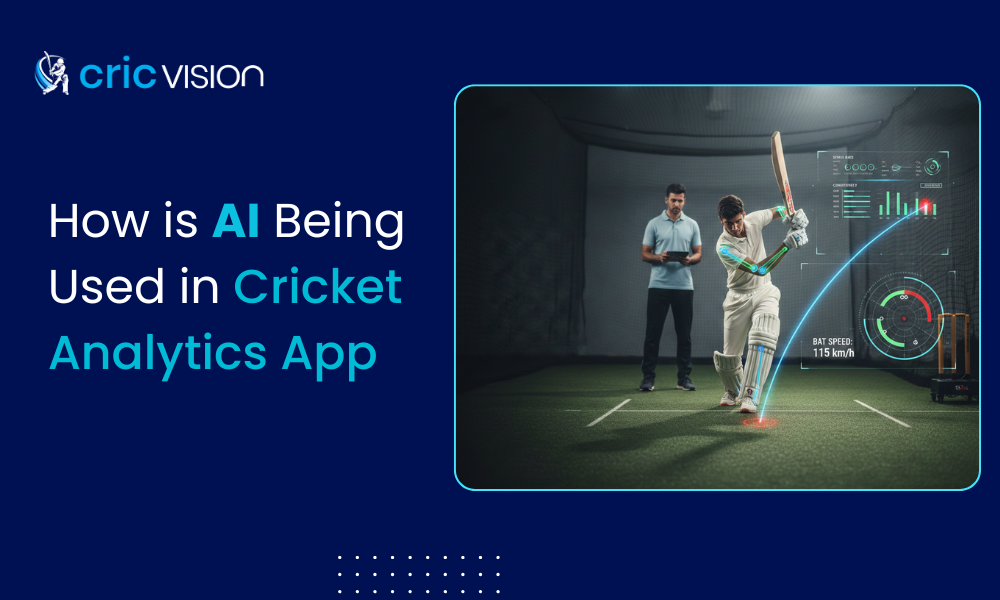
Running a cricket academy today is very different from what it was a few years ago. You are managing larger batches, players with wider skill gaps, different fitness levels, and higher expectations from parents. At the same time, minor technical flaws, workload imbalances, and inconsistent performance can affect a player’s progress if left unaddressed early on.
This is where AI-powered cricket analytics systems are changing how performance is tracked and understood. By integrating AI into traditional analysis tools, academies are gaining deeper insight into the impact of training, match execution, and long-term player development.
In this article, you will see how AI is being used inside modern cricket analytics apps and what this means for the future of your academy’s growth. Let us begin by looking at how these systems measure performance in real time during a match or training session.
How AI Measures Every Move While a Match is Ongoing
While your coach focuses on technique, intent, and potential, modern cricket analytics systems powered by AI capture hundreds of micro-details in the background. These systems convert live match and training activity into structured performance data that can be reviewed, compared, and analyzed over time.
1. Ball Tracking
AI-enabled analytics systems track the speed, line, length, swing, and bounce of every delivery.
For example, if your bowler feels he is bowling consistently but continues to concede runs, the analytics platform may show that most deliveries are drifting into high-scoring areas. This allows your coaches to guide your bowlers to perfection and correct the issue early.
2. Watch Bat Speed, Shot Timings, and Bat Contact Quality
Analytics tools powered by AI measure how fast the bat moves, when it hits the ball, and how clean the contact is.
When a batsman performs well in nets but struggles in matches, the system may reveal delayed bat swing or poor contact points. This helps your coaches identify whether the issue is in timing, technique, or shot selection, and adjust training accordingly.
3. Check Bowling Action, Release Point, and Consistency
AI studies your bowler’s action, release point, angle, and follow-through across spells and sessions.
If a bowler suddenly starts losing pace or accuracy during a season, the AI system can highlight changes in release point or body alignment due to fatigue or other factors. This helps you make early corrections before performance drops or injury risk increases.
4. Help in Field Movement
Analytics systems monitor your player’s movement, positioning, and reaction time in the field.
For example, if a fielder regularly arrives late to the ball or struggles with close catches, AI-powered insights may show slow first-step reactions or poor starting positions. Your fielding coach can then design focused drills to improve agility and awareness.
5. Estimate Response Time Between Delivery and Shot
AI-supported systems measure how quickly a batsman reads the ball and responds after it is released.
When a player struggles to handle faster bowlers or late swing, looking at response-time data, analytics platforms can share insights into delayed decision-making. This helps your coaches create targeted training to improve reflexes and adaptability.
Together, these real-time insights give you a clearer and more objective view of how each player actually performs under match conditions. With this foundation in place, the next step is to explore how AI helps make smarter team selections and training decisions.
How AI Helps You Make Better Team and Training Decisions
Collecting performance data is only the first step. The real value of AI comes when this information helps you make clearer, more confident decisions about training, workload, and match preparation.
1. Analyzing Player Fitness and Fatigue Levels
AI tracks your players’ training load, match intensity, and recovery patterns over time.
When selecting your playing XI, this helps you avoid picking players who are carrying hidden fatigue. Instead of relying only on how “fresh” a player looks, you can rotate players based on real recovery data and reduce injury risks during tournaments.
2. Track Match and Practice Performance Trends
The system compares net-session data with match performance data across weeks and months.
If a player performs well in training but struggles in competitive games, AI highlights differences in timing, shot selection, scoring areas, and decision speed. This helps you decide who is truly match-ready and who needs more preparation before being promoted to the main squad.
3. Identify Form Consistency
AI-powered analytics platforms evaluate performance patterns across multiple matches and sessions.
When choosing between players with similar skills, consistent data helps you favor those who deliver consistently rather than relying on one-off performances. This leads to more reliable team combinations.
4. Support Playing XI and Rotation Decisions
Selection decisions are backed by long-term performance, workload, and adaptability.
For example, during tight cricket season schedules, AI platforms help you balance experience, form, and fitness when rotating players. This ensures performance remains stable even when the lineup changes.
5. Recommend Focus Areas for Individual Training
AI-powered analytics apps highlight recurring technical and tactical gaps for each player.
By addressing these gaps early, you prepare more players to be selection-ready. Over time, this builds bench strength and reduces dependence on a few key performers.
Overall, AI-powered analytics helps you move from instinct-driven team selection to evidence-supported team building. More importantly, it also helps you protect your players’ long-term health and development before problems become visible.
How AI Supports Building Stronger Players Over Time
Most performance breakdowns and injuries do not happen suddenly. They develop over weeks and months through poor playing techniques, uneven workloads, and unmanaged fatigue. AI-powered analytics systems help you spot this buildup early and push you to act before it becomes a setback.
1. Detect Early Injury Risk Patterns
Analytics platforms track changes in bowling actions, players’ movement patterns, and physical load over time.
If a fast bowler’s release point starts dropping gradually or a batsman’s movement becomes restricted, the system highlights these changes. This allows your coaches to intervene early with corrective training or rest to prevent injuries.
2. Monitor Workload and Recovery Balance
Training intensity, match exposure, and recovery periods are continuously monitored.
When your player plays across formats and practice sessions, the system might flag an imbalance in workload. This helps you manage schedules more responsibly and protect players from long-term burnout.
3. Highlight Individual Skill Gaps
AI-driven apps analyze performance data across different formats and match conditions.
If your player consistently struggles against short-pitched bowling, spin variations, or pressure situations, analytics reports make these gaps visible. Your coaches can then create development plans for specific weaknesses rather than generic training.
4. Track Long-Term Performance Progress
AI analytics apps measure a player’s performance across a cricketing season and competition levels.
This allows you to see whether a player is genuinely improving. Long-term tracking helps you plan development pathways with greater clarity and patience.
5. Observe Focus, Discipline, and Mental Patterns
AI-powered systems also capture a player’s behavioral patterns and consistency indicators.
Patterns such as reduced effort or inconsistent execution under pressure become visible through data trends. This helps your coaches identify when a player may need mentoring, confidence-building, or mental conditioning support.
This structured visibility develops players who are technically sound, physically strong, and mentally prepared. Instead of reacting to problems, you begin preventing them.
When this level of structure becomes part of your daily operations, its impact extends beyond individual players. Let us understand it in more detail.
How it Helps in Your Academy’s Growth & Reputation
Most academies grow because coaches care deeply about developing each player and giving personal attention. As your batches and communication increase, maintaining that same level of clarity requires stronger systems.
This is where analytics-backed processes support key areas of your daily operations without changing how you coach.
1. Monitor multiple batches without losing visibility
For academy decision-makers like you, the biggest challenge is staying connected to what is happening across all batches without being present everywhere.
AI-powered analytics apps automatically collect training, match, and attendance data from daily sessions. This information is organized into centralized dashboards that show workload patterns, performance trends, and risk indicators across batches. You can review this anytime and take action before small issues turn into bigger problems.
Impact it delivers: You remain in control of standards and outcomes, as your academy grows.
2. Deliver consistent coaching standards across trainers
As you expand your coaching team, maintaining uniform training standards becomes a leadership responsibility.
AI-enabled analytics systems convert coaching feedback, session outcomes, and player performances into your academy’s benchmarks. This allows you to see how different batches are being trained and where variations are emerging. Your coaches can then align their methods with clearly defined performance goals. strengthening the structured, data-driven approach discussed in our guide on how AI is transforming cricket coaching and training.
Impact it delivers: Your academy delivers consistent coaching quality despite different trainers.
3. Build transparent progress reports for parents and players
As your academy grows, parent communication becomes more frequent and more detailed.
AI-powered analytics applications compile a player’s training performance, match data, and improvement trends into structured reports. These reports present a player’s strengths, focus areas, and development progress in a clear, easy-to-understand format. This allows you and your coaching team to share objective updates during reviews and meetings.
Impact it delivers: Parents and players receive clear, factual feedback, strengthening trust and long-term engagement.
4. Reduce dropouts caused by unclear development paths
Player retention becomes increasingly important as your academy expands.
AI-supported analytics systems track individual progress against defined benchmarks and development stages. Your players can see where they stand, what is required to move forward, and how their performance compares over time. This reduces the uncertainty of your players dropping out and keeps motivation high.
Impact it delivers: You retain more committed players and build stronger long-term development pipelines.
All of this intelligence only creates value when it is delivered through purpose-built cricket analytics platforms that fit naturally into daily workflows.
Build Smarter Academies with Cricket Analytics Apps
Every strong academy is built on disciplined coaching, committed players, and long-term thinking. As your academy grows, maintaining this standard consistently becomes harder. This is where AI-powered cricket analytics apps like CricVision add clarity.
It helps academy leaders like you gain deeper visibility into a player’s performance, workload, and development pathways without disrupting established coaching practices. It helps you make informed decisions, improve resource planning, and build stronger long-term systems.
For leaders focused on building sustainable, high-performing academies, this approach is becoming essential. To explore CricVision’s capabilities in action, download the app for Android and iOS.
If you would further like to explore how CricVision can support your academy’s personalized goals, connect with our team for a detailed discussion.
Want to Know More
1. Do coaches need technical expertise to use the AI platform?
No. Platforms like CricVision are designed for your coaches and staff without technical backgrounds.
2. How much time does data tracking take during training?
Data is captured during regular sessions without adding extra work. Coaches continue training as usual while the system records and organizes performance information in the background.
3. How quickly can we start using CricVision after signing up?
Most academies can begin within a short onboarding period. After basic setup and orientation, your coaches can start using the platform immediately.