

 Author: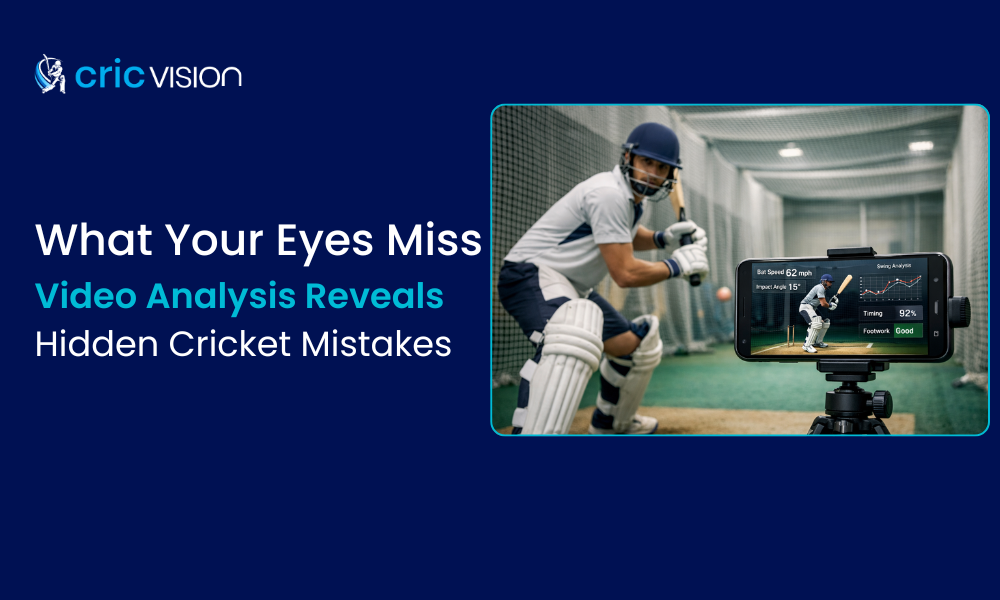
You can run a full training session, watch every delivery, every shot, every movement and still miss the mistake that keeps showing up in matches. It happens more often than most academy leaders expect. Your players train hard, your coaches stay alert, and yet a technical flaw quietly repeats session after session without being fully noticed.
That is because some performance errors simply cannot be caught at live speed. The human eye tracks the outcome of a movement, not always the micro-movement that caused it. Video analysis changes that. It lets you slow the moment down, zoom into technique, and finally see the hidden details that explain why a player improves, plateaus, or struggles under pressure.
So what actually causes these mistakes to slip past even experienced coaches?
Why Certain Mistakes Stay Hidden During Training
To see where these blind spots come from, you need to look at what actually happens during a live training session. The environment itself creates gaps in observation, even when your coaching team is experienced and attentive.
1. Live viewing speed constraints
Every action of a player unfolds in fractions of a second. A bowler’s wrist position at release, a batsman’s head movement at impact, or a slight balance shift during a shot can easily pass unnoticed. Your coach’s eyes naturally track the ball, not those rapid movements. That means you often see the result of an action, but not always the technical trigger behind it.
2. Restricted viewing angles
During training sessions, players are usually observed from one fixed position. A front angle may hide foot alignment, a side angle may miss shoulder rotation, and a rear view may conceal head position or bat path.
A single viewing angle reveals only part of the movement, not the complete action. That means a technique may look correct from your coach’s perspective, while a small but critical flaw might lie just outside their line of sight.
3. Cognitive load during coaching
During a training session, your coach is monitoring multiple players, giving instructions, adjusting drills, and managing session flow simultaneously. Attention is divided across tasks, making subtle technical details harder to notice. That means even when a mistake happens in plain sight, it may go unnoticed simply because the mind is processing several things at once.
4. Memory-based feedback vs recorded evidence
Training feedback is often based on what a coach notices in the moment and recalls afterward. Small technical details might be missed from your coach’s memory, and timing can be misjudged once the action is over. Without a way to revisit the exact movement, analysis depends on recollection rather than replay. That means a correction may be suggested based on what seemed to have happened rather than what actually happened.
The real question now is which kinds of mistakes go unnoticed and can be easily detected through video performance analysis.
Mistakes Only Video Analysis Can Detect
Now that you understand why some errors go unnoticed, the next step is to identify mistakes that only appear when movements are slowed down. These subtle technical gaps are often invisible during real-time coaching.
1. Timing mistakes you might miss
Some mistakes happen within fractions of a second. A slightly late trigger movement, a delayed reaction, or a mistimed execution can change the entire outcome of a play. In real time, these moments look like ordinary misses. On replay, you can pinpoint the exact instant where timing breaks down.
2. Minor body alignment slips
Small posture deviations are easy to miss during live observation. A shoulder dropping early, hips opening too soon, knees misaligning, or the head moving off line can all affect technique. These mechanical details are difficult to judge accurately at full speed, but become clear when movement is reviewed frame by frame.
3. Those split-second decision delays
Not every mistake comes from technique. Sometimes the issue lies in reaction speed or decision timing. A player may hesitate before moving, respond late to cues, or position incorrectly by a fraction of a second. These delays are hard to detect in real time but become obvious when actions are slowed down and studied closely.
4. Mistakes that show up only over time
Some mistakes do not appear instantly. They build up slowly across repeated attempts. A player may start with correct technique, but over time, their movement can shift, timing can change, or posture can weaken without anyone noticing. These gradual changes are difficult to detect during live sessions, but become obvious when multiple recordings are reviewed together.
When these kinds of mistakes stay hidden, improvement slows down. But when they become visible, correction becomes faster, clearer, and far more effective.
Why Video Analysis Accelerates Improvement
When athletes can actually see their movements instead of guessing what they did, improvement becomes easier to measure. Video turns your coaching from spoken instructions into visible proof, which helps players understand and correct mistakes much faster.
1. Visual feedback improves understanding
Athletes process visual information faster than verbal explanation. When your player watches their own action frame by frame, the connection between instruction and execution becomes instantly clear. Instead of interpreting what a coach means, they can see exactly what happened.
Example – A coach asks a batsman to stay more balanced while playing a shot. When the player reviews the clip using a tool like CricVision, they notice their body leaning forward slightly at contact. Seeing the exact moment makes the instruction clearer, and they know exactly what to adjust in the next attempt.
2. Athletes correct faster when they see mistakes
Verbal feedback requires interpretation. Visual feedback requires recognition. The moment your athlete sees a technical flaw with their own eyes, acceptance increases, and resistance decreases. Corrections happen sooner because the evidence is undeniable.
Example – A bowler watches their delivery on video and notices their front foot landing slightly to the side instead of straight. After seeing it, they adjust their run-up line, and their next few deliveries feel more balanced and controlled.
3. Technique adjustments become precise
Without video, corrections can sometimes stay generic because movements happen quickly. Video slows the action down and shows the exact moment your player’s technique fails. This helps your coaches guide players toward specific adjustments.
Example – A batsman is seen consistently edging deliveries on the fourth and fifth stump line during a session. When the replay is paused at the moment just before contact, it shows their front shoulder opening slightly early, which causes the bat face to angle outward. Seeing that link between movement and outcome makes the correction clear, and the next deliveries are played with a straighter bat.
4. Improvements become consistent
When a correction is based on clear visual evidence, your players know exactly which movement to repeat. Instead of relying solely on feel, they can compare attempts and recognize which action produces the best result. This makes improvement more stable, because your player then repeats a known movement rather than guessing each time.
Example – A bowler notices on video that their most accurate deliveries are the ones where the front foot lands pointing straight toward off stump for the right-armer. Once they recognize that detail, they focus on repeating that same landing position, and their line becomes more consistent over the next few overs.
The important question now is how to recognize when hidden mistakes are already impacting your player’s performance.
Signs Hidden Errors May Be Affecting Performance
Hidden technical issues rarely appear suddenly. These issues usually show up as small, repeatable performance patterns before your coach notices a visible flaw. These patterns are often the earliest indicators that a movement detail needs attention.
1. Player’s performance plateaus
When your batsman keeps getting out to deliveries in a similar area, such as repeatedly edging balls outside off stump or mistiming shots on a specific length, it often signals a technical trigger happening at that line or length. The dismissal may look different each time, but the underlying movement pattern is usually the same.
2. Repeated mistakes by players
If your player performs well in drills but repeatedly struggles to produce the same result in match situations, it may indicate that a small timing or alignment detail changes as intensity increases. The technique may look correct during practice, but under game pace, the same shift keeps occurring, leading to similar outcomes across multiple match situations.
3. Inconsistent Execution
When your player struggles to produce the same controlled result against similar deliveries or situations, it often signals that a technical or timing element is not repeating consistently. When this pattern keeps appearing, it usually indicates that some part of the execution is varying slightly between attempts.
4. Technique Confusion
When your player keeps making the same mistake even after correcting what seems like the obvious issue, it often suggests that the primary technical trigger may not yet have been identified. When the same outcome persists despite different adjustments, it may indicate that the visible error is not the only factor affecting performance.
Recognizing these patterns early allows your coaches to move from reacting to mistakes to understanding their causes.
Conclusion: Visibility Drives Improvement
Recurring performance issues are often linked to small technical details that are difficult to detect at live speed. These details can lie behind repeated dismissals, changes in execution under pressure, or errors that appear only in match situations. When those moments are reviewed on video, the exact trigger that affects the outcome becomes clear, allowing corrections to target the real cause rather than the visible symptom.
This is why structured video analysis is becoming an essential part of modern cricket training environments, especially for batting development. From checking a batsman’s head position at impact to reviewing balance, bat path, and timing, instant session reviews help uncover patterns, validate adjustments, and track improvement over time. Tools like CricVision support this process by allowing your batsmen and coaches to closely study each shot and spot the small technical details that live observation can miss.
Download CricVision from the Google Play or App Store to start spotting the details.
Want to Know More
1. How is video analysis different from regular coaching feedback?
Regular feedback tells your players what happened, while video analysis shows them the exact moment and movement that caused it, making your coaching far more precise and easier for players to understand.
2. How quickly can players see improvement using video analysis?
Your players can recognize the issue during their first review, so they can start correcting it in the next attempt.
3. Can video analysis help prevent injuries?
Yes. When you review your players’ movements closely, you can spot stress-causing technique patterns early and correct them before they develop into physical strain or injury risks.
4. Is video analysis useful for team sports as well as individual sports?
Yes, because it lets your coaches review both an individual player’s actions and how they fit into the team’s movement in the same play.
5. How can cricketers use video analysis to improve performance?
Your academy can review each batsman’s technique ball by ball, helping you spot technical details and track improvement easily using tools like CricVision.