
 Author: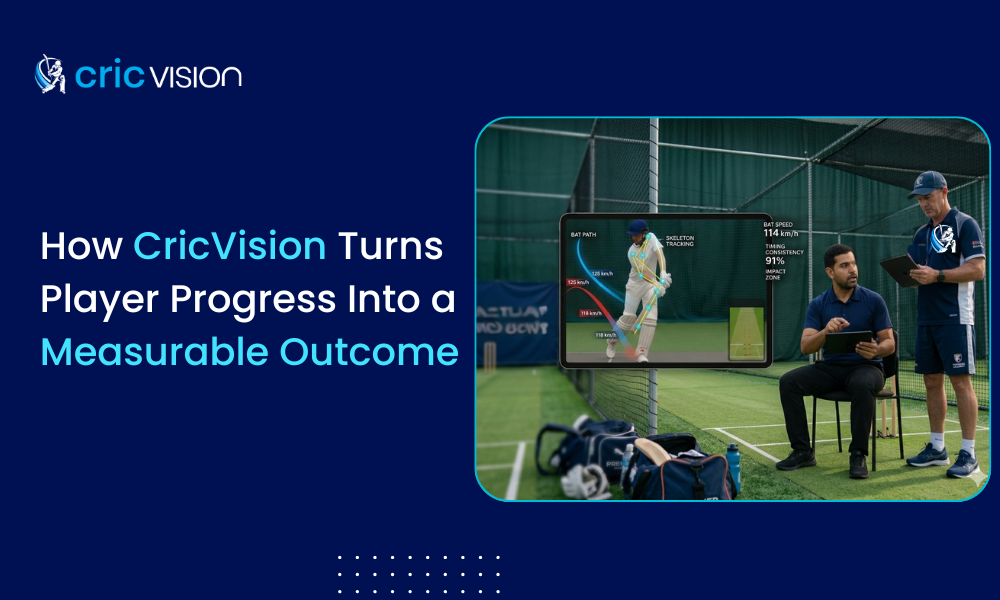
Most cricket academies track improvement through the coach’s memory, occasional feedback, and a general sense of whether a player is improving. That works until a parent asks for proof, or a player loses confidence after a difficult patch, or your coaching team changes and institutional knowledge walks out the door with them.
CricVision is built for academies that want a better answer to those moments. It translates each training session into structured, reviewable, comparable records, so your coaches spend less time recalling and more time developing. This blog covers exactly how that works, from the first session to long-term progress tracking.
Improve Cricket Analytics with CricVision for Player Development
CricVision helps your academy turn regular practice into something your coaches can review, explain, and track over time. Instead of relying on memory or notes, your coaching team gets structured video, clearer performance reports, and progress records they can return to later.
1. Capture Progress Without More Coach Admin
Player improvement often goes unproven, not because of a lack of effort but a lack of time. Your coaches may run strong sessions every week, but when clips are not sorted, feedback is delayed, and reports are scattered in notes, it becomes hard to show improvement later.
CricVision makes video capture and review easier to manage:
- Ball-by-ball segmentation reduces the need to rewatch full sessions
- Voice notes, text notes, and annotations help your coaches add feedback quickly
- One-tap reports make it easier to share takeaways after practice
Better measurement starts with better capture. When your coaches spend less time sorting clips and notes, they have more time to review patterns, correct form or game, and keep player tracking up to date. That makes improvement easier to show week after week.
2. Transform Raw Video to Readable Performance Signals
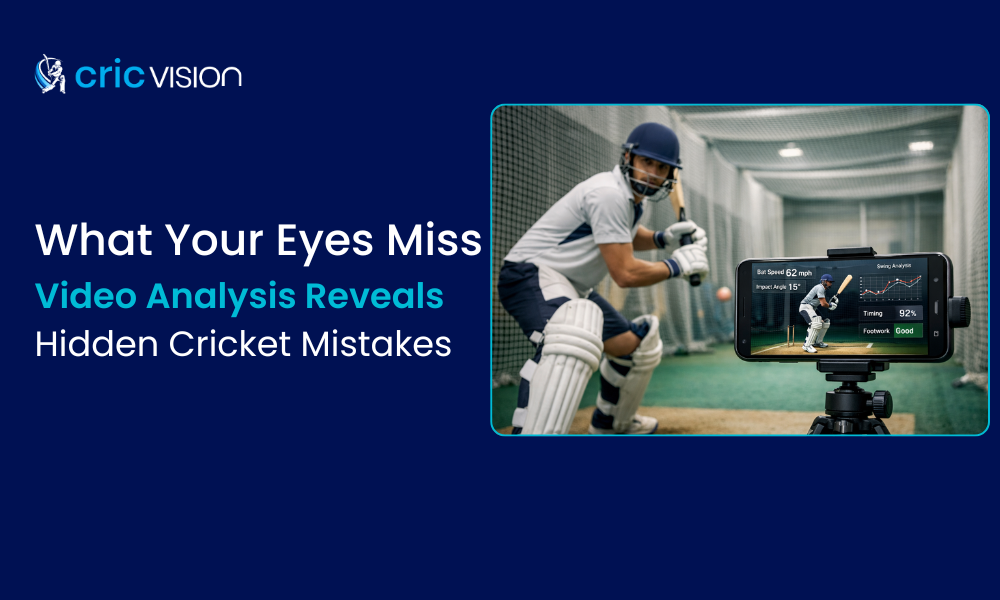
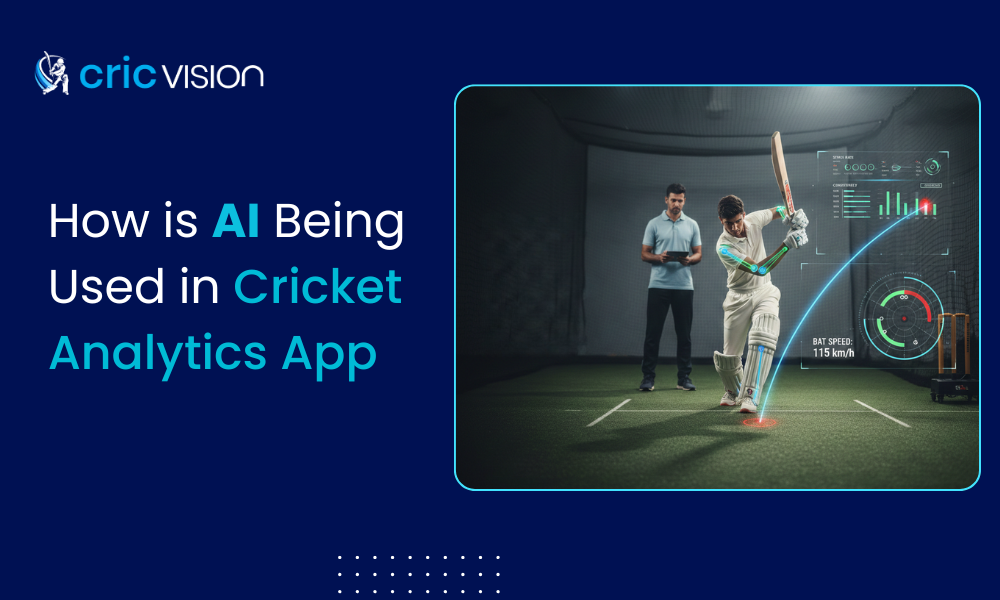
A video becomes useful only when your coaches can clearly see what changed. CricVision is built around that shift. Instead of storing clips as passive footage, it turns them into usable review points. That includes visible analysis around stance, bat path, ball path, head position, body tracking, and shot classification, so your coaches are working with more than just replay. This reflects the broader shift toward AI-powered cricket analytics that is shaping how modern academies evaluate and develop players.
- Stance analysis helps your coaches review setup and alignment
- Bat path and ball path visuals make movement and contact easier to explain
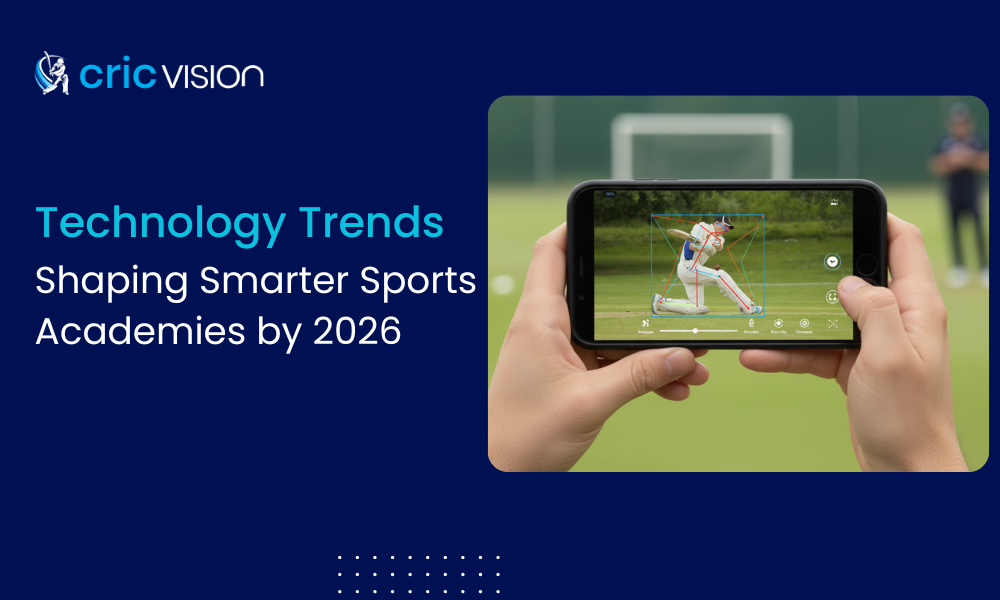
- Skeleton and body tracking highlight posture and sequence more clearly
- Shot classification helps organize sessions into usable review points
A cricket analytics platform for player development is not simply about collecting footage. It turns each session into clear reviews and gives your academy a more reliable way to demonstrate coaching quality, track development, and build a clear performance history.
3. Measure Accuracy, Timing, and Consistency
Parents and players rarely ask for more analytics. They ask one question: Is the player actually getting better? Instead of relying on general session impressions, CricVision evaluates ball speed, bat speed, impact frame identification, shot quality, and consistency trends for a player, making improvement easier to review and explain with evidence.
- Your coaches can review whether a batter is making cleaner, more repeatable contact
- They can track whether timing and control look steadier across sessions
- Bowling reviews can reveal changes in release and pace, making accuracy trends easier to spot
- Field movement cues give your coaching staff something measurable beyond batting alone
When a parent asks how their child is progressing, your coaches should be able to show them something, not just tell them. Accuracy, timing, and consistency data give your academy that answer in a form that holds up.
4. Setting a Clear Starting Point
Most academies begin skill development for players without a documented starting point. Early sessions are loosely remembered, and by the time anyone wants to show results, the reference is a general impression rather than a concrete example.
CricVision allows your coaches to treat the first recorded session as a fixed reference point. It is a point your team can return to whenever they want to show player growth.
- The first session becomes a measurable starting reference, not just an introduction
- Early footage helps your coaches identify what needs the most attention from day one
- Returning to that benchmark clip later makes technical progress visible and specific
When you can show exactly where a player started and where they are now, that conversation becomes straightforward.
5. Trendlines Over Time, Not Just One Good or Bad Session
One strong session can look encouraging, and a weak session can create unnecessary doubt. Neither tells you much on its own. CricVision’s progress dashboard compares clips week to week, tracking a consistent set of metrics and reviewing development on a regular cadence rather than reacting to individual sessions.
- Your coaches can compare clips week by week rather than reacting to a single session
- A small set of standard measures makes tracking easier across multiple players and batches
- Regular updates give your academy a clearer view of whether technical changes are actually holding up over time
Improvement is easier to trust when it is presented as a pattern, not in a standout clip. Your coaches are no longer relying on memory or a few worthy videos. They have a clearer record of a player’s development over time.
6. Compare Technique Side-by-Side
Technique changes are often easier to understand when two clips are placed side by side. CricVision supports side-by-side comparison, including earlier sessions and professional references, so your coaches can visually show what has changed, not just describe it.
- Your coaches can place a current clip beside an earlier session to analyze the visible technical change
- Pro comparison examples give players a clearer visual reference for the movement or setup that your coaches want to reinforce
- Side-by-side review helps your staff explain corrections faster than verbal feedback
For your coaches, this changes the feedback conversation. Instead of describing what needs to change, they can show it. That saves time, reduces misunderstanding, and makes the coaching process feel more credible to players and parents alike.
7. One Shared View for Coaches, Players, and Parents
Clear results matter more when coaches, players, and parents can all see the same evidence. If your coaches have strong session data but parents only hear general updates and players only receive verbal feedback, the value of that data stays inside the coaching room.
CricVision is built to help academies keep coaches, players, and parents aligned through structured clips, dashboards, notes, and updates in one place. This becomes even more important as academies scale and communication expectations grow, especially around transparent parent communication in cricket academies.
- Your coaches can share updates through one platform instead of scattered chats and separate notes.
- Players can see clips, milestones, and feedback in an easier-to-follow format.
- Parents get clearer visibility into what your academy is working on and what is improving over time.
For academy owners, this is not just a coaching tool; it is a retention tool. When parents can see what your coaches are doing and why it matters, your academy looks more organized, transparent, and credible.
Why Cricket Academies Need CricVision to Track Improvement
A player’s development has always depended on good coaching. What has changed is the standard of proof. Parents expect more than general updates. Players respond better to evidence than instruction alone. And academy owners need progress records that hold up beyond one coach’s opinion or one strong session.
CricVision gives your academy the backbone for that standard. From the first recorded session to week-on-week trendlines, side-by-side comparisons, and shared dashboards, every part of the platform is built to make improvement visible, trackable, and credible.
Download CricVision today and start turning your academy’s training sessions into measurable results that deliver answers. Available on the App Store and Google Play!
FAQs
1. How accurate is an AI-powered cricket analytics platform for academy training?
CricVision’s AI tools are designed for structured training environments where camera setup and session consistency are controlled. Accuracy improves over time as more sessions are recorded, giving your coaches a more reliable baseline for each player.
2. What should a cricket academy track weekly to prove that a player is improving?
Focus on a small, consistent set of metrics rather than everything available. Bat speed, contact quality, release point, and timing consistency are practical starting points. The key is tracking the same measures week to week so comparisons stay meaningful, and coaches are not chasing too many variables at once.
3. How often should coaches review player dashboards?
A weekly review cadence works well for most academies, enough to catch early changes without creating review fatigue. The goal is a regular rhythm, not a reactive one. Dashboards are most useful when your coaches check them before a session, not just after a difficult one.
4. Is AI analytics safe and appropriate for junior players?
Yes, when used as a coaching support tool rather than a performance pressure mechanism. For junior players, the value is in making feedback clearer and more visual, not in creating data-driven expectations too early. Your coaches remain in control of how and when data is shared with younger players.
5. What data privacy questions should an academy ask before adopting an AI analytics platform?
Ask where player data is stored, who has access to it, and whether it is used to train external models. For junior players specifically, confirm that parental consent processes are in place and that footage is not shared outside your academy without explicit permission.
6. How can AI analytics improve parent communication without overwhelming them?
Share a small number of clear updates rather than full data exports. One or two session highlights with a brief note on what improved and what is being worked on next is enough for most parents. The goal is clarity, not comprehensiveness, as parents want to know their child is progressing, not read a performance report.